Supporters Like You
Share your Story with The USO Today
Together we can do so much.
Join a community of people who share your passion for the USO by sharing your story.

Carol Rix
I am a proud Navy brat. My father and two brothers served, and my earliest memories of the USO come from old 8mm home movies we watched on our reel-to-reel projector (I’ll pause here while you explain that to your grandchildren!). Those films showed Bob Hope, Ann-Margret, and others entertaining the troops aboard the ships where my father served. That was my first introduction to the USO.
Read more of Carol's story
My brother, who retired from the Navy in the early 1990s as a Lieutenant and F-14 RIO, passed away suddenly in March 2021. He was a strong supporter of the USO, and in his honor, his wife requested that donations be made to the USO in lieu of flowers. That is when I began making a small monthly contribution and took the time to learn more about the organization.
The USO’s impressive history—and its unwavering commitment to supporting the troops—made me want to do more. I officially joined as a volunteer at the end of 2024. The team in the Inland Empire of Southern California represents the USO exceptionally well, and I am proud to be part of it. I’m grateful for the chance to support our service members, and I look forward to helping the USO continue its mission in the years ahead.
My hopes for our service members? I hope they understand and know what the USO is about. We need to spread the word: who we are, who our donors are. And yes, “these meatball subs are free”, compliments of the USO team, and their donors!
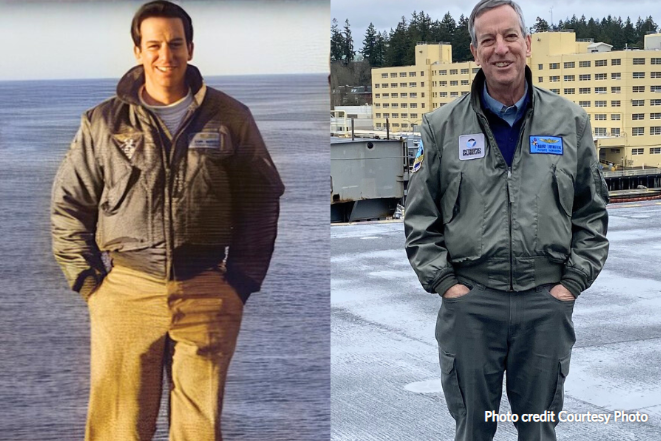
CDR (ret.), MC (FS), USN Harry Livenstein
As a Navy veteran with eight years of active-duty service and 24 years in the Reserve, CDR (ret.), MC (FS), USN Harry Livenstein’s connection to the USO has grown stronger each year — first, as a service member who enjoyed the hospitality and kindness of the USO, and now as a loyal supporter of the USO for more than a decade and counting.
Read more of Dr. Livenstein's Story
After years of supporting his fellow service members as a Navy flight surgeon and emergency medical specialist, Dr. Livenstein has now helped create a place of support for the next generation of U.S. Navy sailors and crew by funding the USO Center aboard the USS Nimitz, the aircraft carrier on which he once served.
From Land to Air to Sea
Dr. Livenstein was confident in his dream of becoming a doctor, even from a young age.
At age 15, when it was time to dissect a frog in his high school biology class, located in the suburbs of New York City in Westchester County, Dr. Livenstein recalled that his lab partners were joking around and poking at the frog – but he was quick to bring them back to the task at hand.
“It’s a silly story, but I still remember. I kind of yelled at my three classmates, and I said, ‘Hey, we’ve got to take this seriously! I’m going to be a doctor. It’s really important for me to dissect this frog.’”
But he was almost as passionate about another interest: airplanes and flying. A few years later, while studying at Colgate University for his undergraduate degree and volunteering to be his college newspaper’s photography editor, he kept that fascination in mind.
“I convinced the editor-in-chief to pay a pilot to take me flying in a little Cessna airplane to take aerial pictures of the campus. Flying in the plane was my major motivation,” Dr. Livenstein said. “I was already thinking about getting a pilot license myself.”
With the rigors of medical school ahead, he thought flying planes would be just a hobby, but eventually it would become a key part of his career in the U.S. Navy.
Dr. Livenstein considered joining the military a few times while he attended medical school – first through the Health Professions Scholarship Program offered by the Air Force, and then again through the Navy. However, each time, he determined it wasn’t quite the right time. However, his experience with the Navy recruiting office stayed with him – he had been introduced to the role of “flight surgeon,” and he was intrigued.

Flying began as a hobby — but the idea of becoming a Navy flight surgeon, combining his passions for medicine and flying, stuck with Dr. Livenstein and eventually shaped his career. | Photo credit Courtesy Photo
“The military calls it ‘flight surgeon,’ going back a hundred years, when all doctors were ‘surgeons,’” Dr. Livenstein explained. “Essentially, it’s primary care for pilots and aircrew, considering how common day-to-day medical issues and problems can affect someone whose job it is to fly a $30 million national asset.”
As a flight surgeon, Dr. Livenstein could apply his experience and knowledge of clinical medicine and human performance in aviation settings to ensure that service members were medically and psychologically fit to operate aircraft and support flight missions.
Dr. Livenstein graduated from medical school in 1982 and continued with internship and residency, but he often thought about becoming a Navy flight surgeon. He left residency early and joined the Navy just two years later, and while he was eager to dive headfirst into the approximately six months of required medical training, he was especially excited about the six-week flight school that was part of the training. Finally, his two passions were combined – medicine and flying – and he accumulated 35 hours of dedicated flight instruction in the same aircraft that naval aviators first learn to fly.
“The opportunity to fly what – at the time – would have been about a $3 million turboprop airplane was the coolest thing in the universe. To get paid for learning to fly was a bonus.”
During this training, CDR Livenstein and one other student flight surgeon trainee were the only students out of a class of 18 who soloed a Navy T-34C training aircraft.
“To this day, I’m proud of that,” he said.
During his eight years of active duty, CDR Livenstein accumulated a total of 500 Navy flight hours, mainly as a helicopter second pilot, including 26 carrier arrested landings (also known as “traps”), two tours with HSL-30 helicopter squadron, a deployment with the Carrier Air Wing CVW-8 on the USS Nimitz and both “Blue Nose” and “Shellback” status – while also earning his private pilot license and instrument rating.
He planned to serve the required three years and then continue his civilian medical career, but an unexpected opportunity led to eight years of active duty when CDR Livenstein traded his shore duty billet for a sea duty billet.
“I decided I like this Navy stuff,” Dr. Livenstein joked.
“I was so excited. I knew for me, it would be a one-shot deal,” he explained, as sea-duty flight surgeon opportunities are few in number and he did not plan to specialize in aerospace medicine, which likely would have involved multiple sea duty deployments.
He deployed on the USS Nimitz, a nuclear-powered aircraft carrier, in the fall of 1986 for a training exercise off the coasts of Iceland and Norway, and again in 1987 for a six-month deployment in the Mediterranean.
It was the experience of a lifetime for him.
“I loved being at sea,” CDR Livenstein said, explaining that he especially loved having the occasional opportunity to go flying in an F-14 Tomcat or an A-6 Intruder.
He also joked that he got the best sleep of his life while at sea on the USS Nimitz: “There was something about the bunk bed and the gentle rocking of the ship. I used to skip lunch and take a nap instead – I could have slept on that ship for 20 hours every day.”
It was during these deployments that CDR Livenstein had his first profound experience with the USO. He distinctly recalled when the USO flew a country music band out to the aircraft carrier in the middle of the ocean to perform for the service members onboard, as part of the iconic USO Entertainment tours and in an effort to boost morale.
Dr. Livenstein spent 24 years in the Navy Reserve after release from active duty, filling in for other flight surgeons or emergency medicine doctors, typically two weeks at a time, in locations that included Bahrain, Spain, Greece and Japan. He was also mobilized to Afghanistan for five months, just a year after he was eligible for retirement.
“It only took me a few weeks at Kandahar Airfield to tell myself I should have retired earlier,” he joked, before then adding seriously:“Thankfully, there was a USO Center on the base.”
While he was in the Reserve, Dr. Livenstein continued to practice medicine in the New York City area, where he completed his emergency medicine residency and then worked at several New York and New Jersey hospital emergency departments for the following 25 years. During that time, he also logged more than 1,800 pilot-in-command hours as a private pilot and bought his own Cessna airplane.
A Decades-Long Relationship with the USO
As someone who loves to fly, even if not in the cockpit, Dr. Livenstein made racking up frequent flyer miles his newest favorite hobby approximately 25 years ago. And through that hobby, he has visited many USO Centers.
As a reservist, he was able to visit USO Airports Centers several times a year while traveling for duty and for personal travel. He knew that whenever he saw that familiar red, white and blue USO logo, he would receive a warm welcome from USO staff and volunteers, along with drinks, snacks, comfortable seating, TVs and internet access.
As a USO supporter, he often designates his USO support toward specific USO Centers that he has visited, including airport Centers in Denver, Chicago, Newark, New York City and especially the Bob Hope USO Center at Los Angeles International Airport.
“Maybe this sounds immature for a 40 or 50 or 60-year-old man, but the Bob Hope USO was one of my happy places,” Dr. Livenstein said. “When other frequent flyers discuss this or that fancy airport lounge, I always smile to myself and think how much more I enjoy and appreciate a USO airport Center.”
As a frequent visitor to the Bob Hope USO Center at Los Angeles International Airport, he could always expect a chili cheese hot dog and his favorite brand of doughnuts upon his arrival.
“For me, it wasn’t a visit to LA to see cousins or to attend a medical or frequent flyer conference without two stops at the Bob Hope USO,” he said. “Once upon arrival and once upon departure. I’d get a hot dog and this specific donut brand, which I got hooked on in Norfolk and weren’t available near New York City.”
One visit, when the Bob Hope USO Center was out of those specific doughnuts, a USO staff member recognized Dr. Livenstein and – with the exceptional hospitality that the USO is known for – went out to buy him those favorite doughnuts so that they would be ready for him on his next visit to the Center, prior to his return flight home a few days later.
“My affection for the USO is deep and goes back many, many years,” he said. “And since the USO O’Hare and Bob Hope USO Centers function as staging points for sailors and Marines in airports on the way to or from boot camp, I always understand when a USO Center is so crowded with active duty personnel that they cannot accommodate a reservist or a retiree. The young enlisted appreciate it even more than I do.”
So, when the opportunity came about for him to come full circle and support the building of a USO Center aboard the USS Nimitz, he jumped on board – this time literally and figuratively.
“I was very excited to sponsor the Nimitz USO Center, since that’s where I did my sea duty,” CDR Livenstein said. “When I saw the Center in-person at the ribbon-cutting and spoke with the skipper and the chaplains, I knew my support was very well placed.”
The initiative to build USO Centers aboard warships and Navy aircraft carriers began a few years ago, in partnership between the USO and the Navy, to help service members better handle the physical and mental challenges they face when at sea for several months at a time.
Being surrounded by walls of grey metal and the sound of jet engines for 6-9 months straight, while living in cramped spaces with little privacy, all while dealing with the monotony, isolation and constant work stress can take a toll on sailors and Marines out at sea. Many of these service members just want to go someplace quiet, someplace relaxing, someplace unlike any place else on a Navy ship where they can recharge, take a break from the stressors of their duties and connect with the people and activities they love.
And that is exactly what the USO Center onboard the USS Nimitz is for.
“This new Center is very significant with its current deployment to the Middle East,” CDR Livenstein said, highlighting the Nimitz’s role in maintaining order in the region amidst heightened tensions. “I feel like that’s very impactful to have a USO Center there when they’re under such pressure on such a high-tension deployment.”
Ship-based Centers have many of the same amenities as brick-and-mortar USO Centers, including internet connectivity, computers, TVs, electronic gaming equipment, snacks and beverages, libraries and more. Crucially, many of these USO Centers on ships have soundproof phone booths, where service members can privately speak to a loved one in an environment where privacy is hard to come by.
These Centers also provide comfortable seating and a home-like environment that offers service members a break from the cold and stark atmosphere of a ship.
“I think someone who hasn’t been in the military, even more so someone who hasn’t been in the Navy, and even more so someone who hasn’t served any significant amount of time at sea … I don’t think they can fully understand just how much of a game changer this is,” CDR Livenstein said.
“On the Nimitz, the USO Center is three complete rooms that look like they could be in the library or the den in your home. Nice, comfortable furniture and nicely painted walls, and a ceiling that isn’t a bunch of pipes and wires and valves,“ Dr. Livenstein continued. “The contrast between the USO Center and enlisted berthing and dining is so dramatic, so significant, that it would take someone who’s unfamiliar with a Navy ship only a millisecond to see it and realize the importance and significance of a ship-based USO Center.”
A comfortable environment and basic amenities may seem simple to the average person, but they can have a powerful impact on the daily lives of sailors and crew members — especially when it comes to their mental well-being and morale. In fact, the U.S. Navy’s suicide rates among sailors have continued to increase, and as a result, the branch has taken serious efforts to support mental health among its ranks – including building more USO Centers aboard its vessels. This is critical during recent deployments, some of which have recently seen some of the most intense combat by the U.S. Navy since World War II.
When thinking about how the USO Center aboard the USS Nimitz – and other ship-based Centers – will be used, CDR Livenstein often thinks of the newest generation of sea-faring service members, who are adjusting to a new way of life and facing the challenges of deployment.
“I am fortunate and blessed to be able to support service members in this way and to be in a position where I can support the USO. It feels wonderful,” he said.
Dr. Livenstein emphasized that for him, the importance of a USO Center isn’t measured in donated dollars, but in lives touched. Recognizing the unique pressures of life at sea, he sees these Centers as a vital lifeline for sailors’ well-being. And CDR Livenstein’s contributions are already having a positive effect. In June 2025 alone, the USO Center aboard the USS Nimitz had 8,553 visits from service members.
“Thank you for all that you do. It is truly a blessing to the sailors on this ship,” shared a U.S. Navy chaplain aboard the USS Nimitz, who explained that the ship has recorded an approximately 400% increase in usage of the space since the USO renovated it and turned it into a ship-based USO Center.
From airport terminals to aircraft carriers, from USO Centers on bases to the open seas, the USO stands beside service members at every point in their military journey – and it is all thanks to the support of our generous donors. For sailors aboard the USS Nimitz, the new USO Center is more than a place to relax — it’s a reminder that no matter how far from home they sail, they are never alone. Thanks to supporters like Dr. Livenstein, the USO can continue to create these moments of comfort and connection, ensuring that wherever their mission leads them, service members know the USO is there for them.
Edgar Medina
My name is Edgar Medina, and about 55 years ago, I was a Marine Corps Lance Corporal returning home after a tour and extension in Vietnam. I was an infantry Marine who experienced combat, and I was relieved to be back home again. I did not inform my family about my return in order to surprise them. The problem was that I was at the San Francisco Airport and had no means of getting home.
Read more of Edgar's story
I had a military government check, but very little cash. There was a Bank of America at the airport. Unfortunately, they were not willing to cash my check since I did not have an account with them. Well, I was stunned that, after I presented my military I.D. and the government check, they still would not help me. Even after I explained that I was returning home from the Vietnam War and was just trying to get money to get home, it did not make a difference. That was the first of many unpleasant scenarios I experienced upon my return.
I won’t get into details about the many situations I experienced. However, many people know and remember the treatment Vietnam War veterans received when they returned home. I was just one of many. Fortunately, while at the airport trying to figure out what to do, I saw a USO counter at the terminal. When I approached the counter, I was met with warm, smiling faces.
When I explained my predicament, one of the ladies at the counter said that she would be able to help me. She explained that her shift would be ending soon and that she would gladly drive me home. I don’t remember her name or even what she looked like, but I would never forget her kindness. Since that incident, the USO has had a special place in my heart, and I appreciate what they do for military service members and veterans.
Karen Petrie
Growing up, the values that shaped my life came from watching my parents, especially my dad, John Price. The way they treated others with respect guided my own actions and instilled deep admiration for our military community. To this day, I can spot service members in a crowd by the way they carry themselves, present or retired, their dedication and bearing stand out, and I am proud to thank them for their service.
Read more of Karen's story
Honoring Legacy, Service, and Family
Being prompt, always early or at least on time, is a habit I try to maintain, one I hope others might adopt as well. It’s just one example of the discipline I witnessed and learned from my family.
Remembering “The Godfather” of Military Service
During his military career, my dad earned the nickname “Godfather” for his guidance and fairness, a sign of respect that lasted well after he retired. Whether working alongside Marines at Cherry Point in North Carolina, being called “Expeditionary” by officers, or setting up the EDI catapult for the first combat launch in Vietnam, his contributions shaped military operations and camaraderie across the globe.
From supporting missions in the Falkland Islands, to cementing the Harrier pad at President Bush’s Kennebunkport home, to assignments in Norway, Okinawa, and even the Berlin Airlift; my dad’s expertise and generosity touched countless lives. On the USS Kitty Hawk, he endured the risks of carrier deck duty, a true lesson in teamwork under pressure.
As a family, we traveled often, living abroad and touring Europe. Dad’s military service gave us incredible experiences, and memories, from England to Hawaii, California to North Carolina. Whether teaching me to drive or sharing a laugh over birthday cake on the ship, these moments made me feel special, always learning from his strength and kindness.
Pride, Sacrifice, and Community
My father devoted 50 years to the Navy and our country, earning the honor and respect of all who served alongside him. At the time of his retirement, he was the first to reach such an incredible milestone. He was a dedicated family man, caring for my mother and two daughters while giving us the world, literally, with the travels and adventures of military life.
Despite his decades at sea, my dad never learned to swim, even surviving the sinking of the USS Wasp in 1942 by clutching a rope until rescue boats arrived. Our time in Hawaii was bittersweet, with island adventures and heartfelt goodbyes. From living in Quonset huts to walking the decks of mighty carriers, each chapter highlighted the sense of unity and purpose in military families.
As I reflect on these stories, I’m grateful for my parents’ love of travel, resilient spirit, and the examples they set for me and my sister. Every move, mission, and memory has shaped who I am and strengthened my support for the USO and our service community.
I support the USO because of these lifelong lessons and my gratitude for all who serve. I’m proud to be John Price’s daughter as his memory inspires me every day. This is why I nearly tripled my monthly contribution last year and encourage others to do the same. You will not miss the money, but they will certainly miss out on having their ‘home away from home’ especially on ships, and wherever else their orders carry them.

Paul Pool
Paul Pool says there is no better way to support military members than making a future gift to the USO. As a volunteer, supporter and USO 1941 Legacy Society member, he explains the difference the USO is making in the lives of our service members.
Read more of Paul's story
Paul Pool says there is no better way to support military members than by making a future gift to the USO. A volunteer, supporter and USO 1941 Legacy Society member, he explains the difference the USO is making in the lives of our service members.
1. Tell me how you first got involved with the USO. What was your first impression?
The Army sent me to the USO. After I sold my business in ’06, I volunteered for Army service. The U.S. Army Recruiting Command battalion commander at the time made sure I was serious and made it his mission to get me in. He tried for almost a year to get waivers to start me off in the Medical Corps, but just couldn’t work around the age issue. So, he asked me to stay and work with them, where I basically became his civilian aide. There were alphabet soup alternatives, but I stayed and worked with them and still do to this day. He left as they all do after a couple of years, and I wasn’t as active with the new commander, but I wanted to do more. The Army battalion master sergeant said, “If you want to help us, no one does more for us than the USO.” He arranged a meeting for me with the USO Houston director, who was a retired Army.
My first event was a big one where the USO and Wounded Warriors brought troops in from Brooke Army Medical Center (BAMC) in San Antonio. The Houston Texans also helped sponsor this. The event lasted a week, and the Texans opened up their training facility, dining and break rooms, locker rooms, etc., to all troops so they could meet football players up close and personal. Then they were on the field Sunday morning against the Kansas City Chiefs. I was there for all of it. Even assigned a “battle buddy” from BAMC and pushed his wheelchair around for a week. Needless to say, I was very impressed. And I was all in.
2. What has surprised you most about working with the USO?
I was not surprised by the USO because I had expectations based on what the Army told me. It would be more accurate to say my expectations were not only met but exceeded.
3. What do you wish other people knew about us?
I wish Americans knew the breadth and scope of USO service. I was at a conference once when Sloan Gibson (the former United States Deputy Secretary of Veterans Affairs) said, “We are in the business of delivering goodness.” That nailed it.
4. Have you had the opportunity to see the difference made by your gift or meet any of the recipients of the services you made possible? What was that experience like?
I’ve met many troops after volunteering with the USO. They all benefit from wherever the funds come from. I’ve worked both airports in Houston, then funded the Military Entrance Processing Station center and helped start it up—was Team Leader for four years there. I also sponsor the “Beach Bashes” at my Galveston Island beach home. This summer will mark the 7th year. It is a joy to interact with them and see first-hand the difference USO makes in their lives.
I served as Chairman of the USO Advisory Committee for three years, so I have seen the Houston budget and know how the funds are spent. As a corporate CEO, I know a thing or two about budgets. All monies were spent well and made a tremendous impact.
5. What would you tell someone who was thinking about making a similar gift to us?
I would tell potential donors. If you want to help and support active duty troops, then support the USO. There really is no better alternative.
Ms. Lyndia R. King
Ms. Lyndia R. King gifts a bequest to the USO as a lasting tribute in memory of her father, Earnest William King, to honor and celebrate his extraordinary life. Ms. King hopes that this soldier’s story will give inspiration to those men and women who defend our country and our freedoms, and that this gift will express hers and her father’s heartfelt gratitude for their service and sacrifices that will never be forgotten.
Read more of Ms. King's tribute to her father
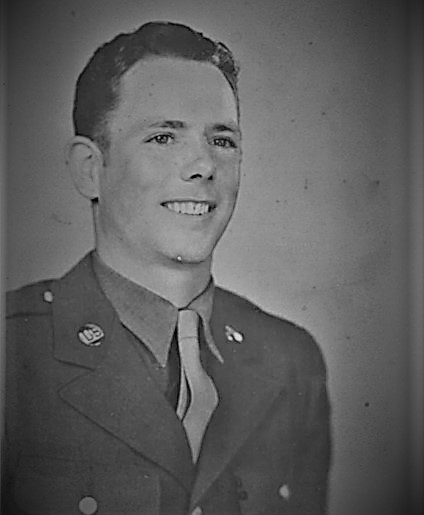
Earnest William King (1920–2011) was born on a farm in Blackridge, Virginia, where he grew up during the Great Depression as one of eight children. He was inducted into the U.S Army on Nov. 24, 1942, during World War II. After basic training in Camp Adair, Oregon, he served with Company K, 414th Infantry, 104th Division in the European Theater in France, Belgium, the Netherlands, and Germany, where he was severely wounded on November 17, 1944. He was honorably discharged from military service on Oct. 10, 1945.
He was a highly decorated veteran of World War II, having received the Combat Infantry Badge, the Good Conduct Medal, the European Theater Service Medal, the Bronze Star, the Purple Heart, and the Silver Star for gallantry in action and courage, bravery, and supreme devotion to his comrades under fire. He personally paid an enormous price for our freedom and struggled with recovery throughout his lifetime, yet felt it was his duty to serve. He never regarded his medals and awards as anything special or mentionable, and they were even unknown to his children until much later in life when they became adults.
After his service in World War II, Mr. King returned to Virginia to begin life with his wife, Mary, whom he had married in 1944 before being shipped overseas to serve in the European Theater. He began work as a supervisor for a furniture-making company and became the father of four children in four years. His life seemed to be going in the right direction, yet he was haunted day and night by an extremely important promise he had made several years before but had failed to keep. When he was wounded in 1944 and lay dying for two days on the battlefield, he had promised God if He let him live, he would spend the rest of his life serving Him and helping his fellow man. To keep that promise, he enrolled in a seminary institution in 1954 and became an ordained minister in 1958.
From that time on, in addition to being a soldier for his country, Mr. King became a soldier for God. His abiding faith in God sustained him, and he carried a message of faith and hope to others wherever he went. He had an uncommon compassion for people and touched thousands of lives with his love, concern, and support in the many churches where he pastored for over 53 years up and down the East Coast. When he retired from the ministry, he continued to be a source of inspiration and a Christian example to all those who had the privilege to know him. Many have said he was the most honorable man they ever knew.
For thirty-some years, Mr. King was a member of a combat support group for veterans at McGuire Veterans Hospital in Richmond, Virginia, and eagerly looked forward to meeting with his “Band of Brothers” at every scheduled opportunity. He provided wisdom, encouragement, and support, and all of them displayed genuine love, respect, and appreciation for each other. Mr. King always considered his association and camaraderie with this group of combat veterans to be the greatest honor of his lifetime.
Life was precious to Mr. King. He loved simple things and was captivated by the wonders of the world around him: a conversation with someone he had never met before, a good sermon, good music, all things baseball, a flourishing vegetable garden, beautiful flowers, trees, birds, animals, and even clouds. His friends and family are certain he never forgot a single thing that ever happened to him in his life. He continually amazed them with the countless stories of his life and the exact details of every situation he was describing, which made them feel as though they were there.
Mr. King was also a dedicated father and family man. He had four children, four grandchildren, nine great-grandchildren, and was devoted to his wife for sixty-seven years. His greatest joy came when his family gathered around him, and he delighted in telling others, when he had an opportunity, how proud he was of them.
To his family, Mr. King was truly a soldier for God and country: a humble, moral, genuine, honest, compassionate, righteous, honorable, and extraordinary man who certainly left the world a much better place. Without question, he was a hero to many.
Ms. Lyndia R. King gifts this bequest to the USO as a lasting tribute in memory of her father, Earnest William King, to honor and celebrate his extraordinary life. Ms. King hopes that this soldier’s story will give inspiration to those men and women who defend our country and our freedoms, and that this gift will express hers and her father’s heartfelt gratitude for their service and sacrifices that will never be forgotten.

John and Melinda Baum
Supporting the USO is an unwavering conviction John and Melinda have had for years. As members of the Vanguard Circle in the Leadership Council, they were invited to be part of a special group that witnessed USO military operations in Germany. They could easily see that their annual contribution to the USO was an easy decision. To them, there is no doubt that the USO is a vital part of our military.
Click here to learn more about being part of the Leadership Council.
Read more inspiring stories submitted by supporters like you.
It takes a force. Their journey is everyone’s responsibility. From the moment they enlist, through their assignments and deployments, and as they transition back to their communities, they can rely on your support.
Share your story with the USO Today
Together we can do so much.
Join a community of people who share your passion for the USO by sharing your story.